Pitchers are made unique by the number of different pitches they throw and how well they throw them. Some pitchers are notorious for throwing the knuckleball, and some are famous for their 12-6 curve ball. Pitchers must mix up the kind of pitches they throw so that it keeps the hitter off balance. Here we will discuss how to throw several pitches and the grips for them. There will be pictures to help demonstrate how to throw the pitches.
The infamous four-seam fastball
The four-seam fastball is the most common pitch to be thrown in all of baseball. This pitch is a straight-forward pitch that typically does not have a lot of movement. This is also normally the fastest pitch in baseball. The way your fingers grip the seams cause the rotation of ball and fast movement towards the catcher’s mitt. The grip for this pitch is to use three fingers with your index and middle finger stretching across two of the red seams. It is called the four-seam fastball because your two fingers on top are touching the seams of the baseball in four different spots. This is also the grip that most all fielders use when they throw the ball anywhere on the field.
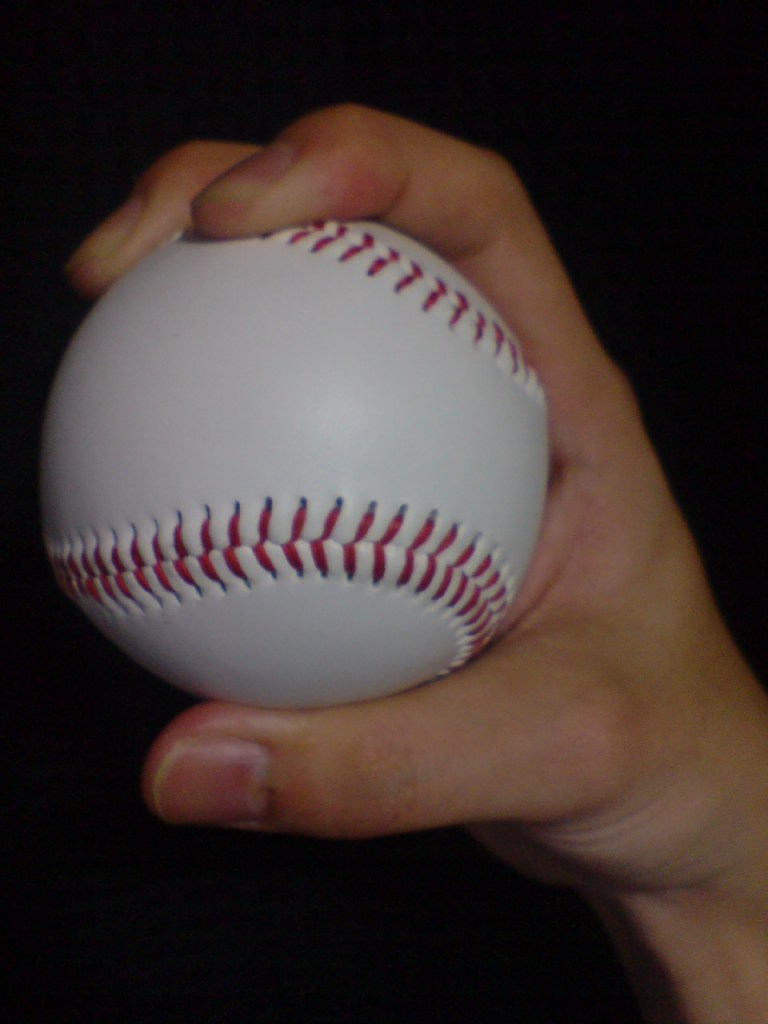
The two-seam fastball
The two-seam fastball is similar in speed to the four-seam fastball, and some pitchers use it as an alternative. The two-seam fastball is known to have a little bit of sideways movement when it is thrown. Similarly the the four-seam, your fingers only touch two seams when throwing this pitch. The four-seam and two-seam fastball are the two easiest pitches to teach a pitcher because a normal throwing motion is involved.

The changeup
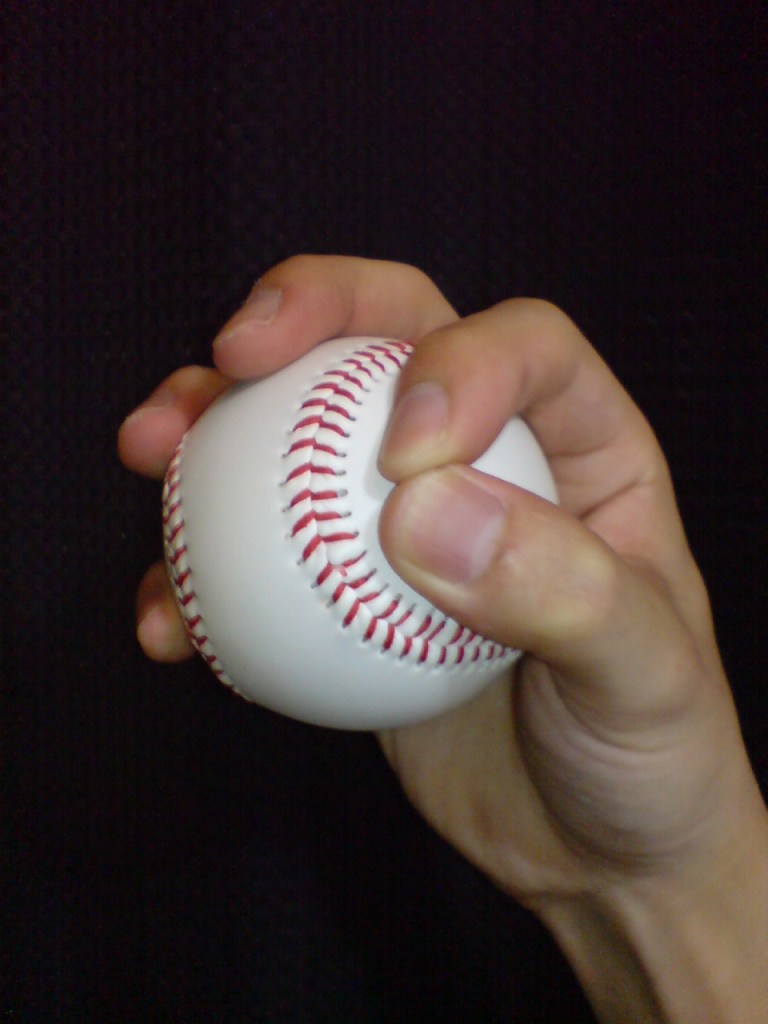
The changeup can be thrown in a number of different ways. The two most common are the circle changeup and the five-finger changeup. All changeups are intended to slow down the speed on the ball, but give an illusion that it is a fastball. The arm motion is the exact same, but the grip on the ball causes the ball to be thrown at a slower speed. The circle change up is gripped by making a circle shape with your thumb and index finger and placing the rest of your fingers anywhere on the ball. When you throw this pitch, the ball will naturally slow down from rolling off the three loose fingers. The five-finger change up is gripped by evenly spreading your fingers out over the entire ball. When you throw this pitch, the more thumb pressure that is applied, the more the ball will slow down.
The curve ball
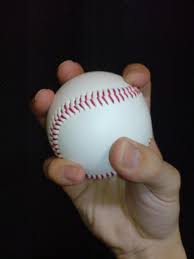
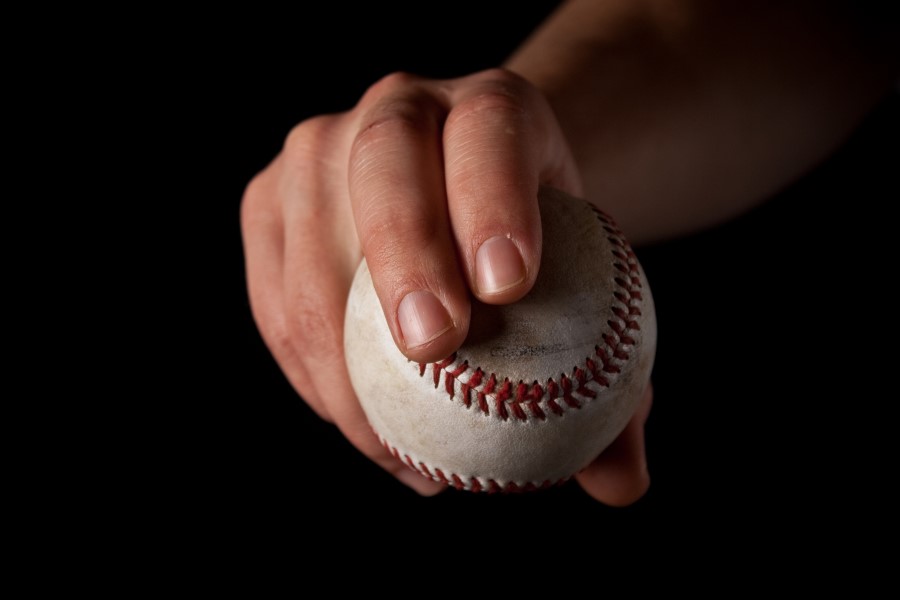
Here is where we begin to get tricky. The grip of pitches like this is not necessarily the hard part, but the throwing motion in which you throw them can become difficult. These types of pitches can also put a lot of stress on your arm. The curve ball and other specialty pitches are not normally taught or thrown until a player reaches at least age 12. The curve ball is thrown by placing your index and middle finger together parallel to one of the long red seams. When you throw this pitch, you wanna to throw it so that your fingers rotate over the top of the ball. This will allow the ball to curve downward as the pitch is approaching the plate. This pitch has the same ball rotation as a four-seam fastball, so it can be deceiving. The curve ball is typically thrown to either strike someone out or to keep from allowing them to hit it hard into a gap in the field.
Conclusion
With these four pitches, you will be able to be an effective pitcher. Most pitchers at the highest levels in the game only have these four pitches to throw. They cover all levels of difficulty and effectiveness. If a pitcher can perfect these pitches, they are hard to hit off of. Many other pitches such as a knuckle ball and a screw ball have entered the game over the years making it interesting, but the basics encapsulate the majority of major league pitchers.
 Nolan Ricketson's Baseball Analytics