Featured

The Science of Batting

How does a professional major league baseball player execute a fundamentally sound swing?

“The hardest thing to do in baseball is to hit a round ball with a round bat squarely.”

-Ted Williams

Bat angle, exit velocity, ball spin, and mindset: a small portion of the many factors that affect the difference between a four-hundred foot home run and a fifty foot ground out to the second baseman. Batting a baseball takes an extreme amount of concentration and practice. What a professional baseball player like Pete Alonso (pictured above) makes look easy as he competes in the home run derby, can seem impossible for other individuals no matter how strong or athletic you are. Baseball is a sport that takes an extreme amount of focus and cannot be “picked up” in a matter of days like football can. Here we will break down the physics of a professional baseball swing.

The Fundamental Body Parts

When a major league baseball player approaches the plate, most have one goal in mind: make solid contact with the baseball to drive to the outfield. What they don’t tell you is that in order to make that happen, a lot must be done right. To give perspective on the amount of failure that happens in the game of baseball, a player will sometimes have a career batting average of .300 and get elected to be a part of the Major League Baseball Hall of Fame. This means that 7 out of ten times that batter approaches the plate, he fails to get a hit. What a frustrating game right? That being said, we will analyze the proper mechanics of a hitter that will result in making solid contact with the baseball.

  • Shoulders:

The shoulders play an intricate part in facilitating the swing path. From an initial resting state, the batter should move his shoulders backwards towards the catcher indicating the loading phase. Upon release from the loading phase the shoulders will guide the swing path of the bat and determine where the bat makes contact with the ball. Some might say that the strength of the shoulders can leverage the overall velocity of one’s swing.

Simple concepts of balance can be applied to a swing to analyze the role of the shoulders. If the back hip of a hitter is collapsing and driving inward, we know that the shoulders must open towards the pitcher in order for the hitter to maintain balance.

  • Hips

Power is accumulated in the hips, and the more explosion a batter has from the hips, the deeper the flight of the ball off the bat will be. In order to produce this power, the shoulder and the hips must work together even though their movements can be considered antagonistic. When a batter begins to leave the loading phase and stride towards the ball, the rotation of the hips should be the first thing in a hitter’s swing. The rotation of the hips will create a separation between the hips and the shoulders and allows the shoulders to act much like a rubber band. A common flaw that some hitting coaches teach is that the shoulder and hips rotate together, but that will not produce a high velocity swing.

The Desired Swing

In order to better understand the fundamentals of a better baseball swing, it can better be broken down into four steps. These steps break down the major components that should be evident in any good hitters swing.

Step one: The load

The purpose of an effective loading step is to harness energy to release into the baseball. This can typically be done by shifting your weight to the inside part of your back foot. It does not make much of a difference if your heel rises or not. That is more of a personal preference. At the end of the loading step, your back foot, back knee, and back hip should all be in the same plane.

Step 2: The Step

The correct step helps us to properly time the pitch trap the weight in our body in preparation for the launch. During this step, the hands are still back with a steady head waiting on the incoming pitch. The importance of this leads into the rest of the swing. Failure to execute a proper step may disorient your ability to judge the speed or location of the ball. The step should be short and composed.

Step 3: The Launch

The purpose of the laugh is to unleash the power harnessed during the first two steps of the swing. The hands are not the first thing to commit in this step. This is a common misconception. Allowing the ball to travel deep into the hitting zone will allow for better contact and greater power. The hitter will drive the knob of the bat towards the ball, pulling with your bottom hand to guide the barrel. The launch also is where the hips explode and set the tilt of the body. The front foot becomes open at this point.

Step 4: Contact and Extension

The purpose of contact and extension is to hit the ball hard somewhere and extend your power through the ball. The hitter’s backside will be completely rotated and the front foot angled. The top hand will be palm up at this point and be pushing the bat through the baseball. This completes the motion to maintain balance during the swing. Extension is used to further release energy into the ball.

Of course, practice makes perfect with most things, but not so much with baseball. As we are reminded, the best players fail 7 out of 10 times at the plate! With these fundamental steps and proper use of key body parts you will be on your way to hitting the baseball hard and far in no time.
Summary

Upon starting my blog, I wanted to write about something that I was passionate about enough to make all of the required blog posts. The one thing that came to my mind that has encapsulated my mind and life up until college was baseball. I grew up playing baseball from a young age and became super intrigued by the sport. Travel baseball on the weekends and recreation ball during the week was the lifestyle I lived for the first 18 years of my life. I can’t remember a time in my life that I was not involved with baseball in some capacity. That sparked my memory to educate the class and viewers on different aspects of the game of baseball. The goal was to provide more of an educational blog rather than a blog about stats and current baseball events. Seeing as the current times that have presented themselves, I’m glad that I chose the educational side. There is not much baseball being played at the moment. I broke the blog down into three separate categories: the science of hitting, the science of throwing, and the science of fielding. Within each category there are several posts that aim to educate the viewers of every aspect of the game of baseball. 

In the science of hitting category, I broke up the aspect of hitting into four separate blog posts. The science of batting was intended to help the viewers understand the basic body parts and body movements that go into swinging a baseball bat. If viewers can understand the body parts and all the intricacies that go into an effective baseball swing, then maybe they can appreciate the game as a whole. I then described the mindset of a hitter. Baseball is a game of momentum and mentality, and it is not solely based on physical athletic ability. Once a reader can understand the mindset of a hitter, then they will be able to better understand the benefits and setbacks of hitting from the right or left side of the batter’s box. “Lefty Batter vs. Righty Batter” shows that there is not a superior side of the plate to hit from. Both have their benefits and deficits. The last thing that I thought would be exciting for the viewers to understand is how hitting is perceived in the eyes of a scout. Scouting for hitters is the last blog about the science of hitting that takes a deep dive into how scouts evaluate players. 

The second category that I educated my viewers on was the science of throwing. The most complicated type of throwing in the game of baseball is off of the mound. The pitcher must perfect his throws more so than any other position, so I decided to focus two posts on pitching. One post simply explains the different ways in which a pitcher throws the ball. In the next post, I outlined several different types of pitches that a pitcher could throw if they wanted to. I finished with a post about throwing from several different positions. This post was intended to educate my viewers on the various types of throwing motions that are used in baseball and when to use them. 

The third category I wanted to educate my viewers on was the science of fielding. There were four blog posts in this category that probed the basics of each position on the baseball field. In the “Five F’s of Fielding,” the basics of all fielding was described, but it mainly showed how infielders field a ground ball. In two other posts, I outlined how outfielders and catchers play their position as well. The last blog I categorized in this section was the blog titled “Running with a Purpose.” This was intended to show the viewers the importance of knowing how to run the bases. 

Throughout the process of making this blog, I was reminded of my love for the game of baseball and my appreciation for blogging. The advancing power of technology has given me the ability to express my knowledge and passion for the game of baseball to my viewers. I now have a greater appreciation for blogging and a deepened love for baseball. 

Throwing from Various Positions

While pitching is an important part of the game of baseball, throwing from all of the positions on the field have to be accurate. Different arm slots and ways to throw the ball are more effective in different circumstances. Outfielders, infielders, and catchers all need to be proficient in throwing from different arm slots. Aside from the arm slot, it is critical to use your glove hand as a target for throwing. A useful analogy often used is describing your glove hand as being the scope of your gun. Here we will discuss the different types of ways that players throw the ball in the game of baseball.

Infielders

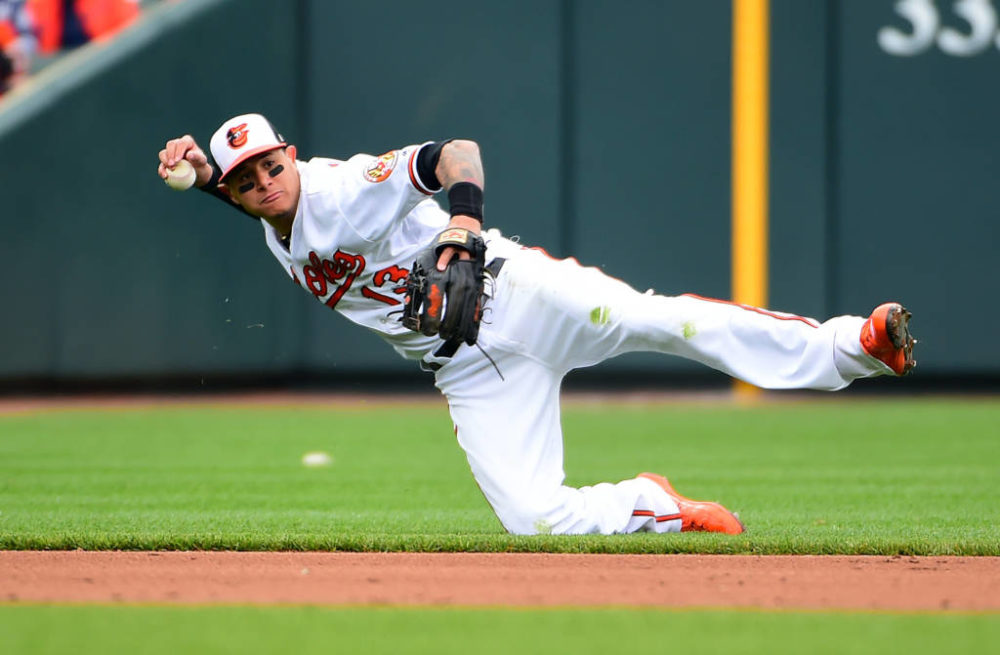
Infielders are probably the most dynamic in the way in which they throw the ball. Sometimes they must short-arm it and other times rear back and throw it with everything they’ve got. Upon fielding the ball, infielders then begin shuffling towards their intended target. The faster they get rid of the ball, the more likely they are to get the runner out. The ball is always the fastest moving person in the game of baseball. To get rid of it fast, most infielders short arm the ball. This is done by only bringing the ball to about your ear before stepping and throwing the ball. For longer throws, an infielder may need to rear all the way back and release. The easiest way to minimize the amount of time you hold onto the ball as an infielder is to have proper momentum moving towards your target. 

Outfielders

Outfielders must muster up a bunch of strength to make longer throws than infielders do. This is accomplished the same way: by getting your momentum moving towards your target. However, outfielders normally perform what is called a crow hop instead of shuffling sideways towards their target as an infielder does. Outfielders normally throw by extending their arm all way back and throwing over the top of their body. By throwing over the top of their body, the long throw they are about to make will continue on its path to the intended target. 

Catchers 

Catchers have a unique throwing motion, because they must get rid of the ball quicker than any other position. Catchers sometimes take one step into their throw, shuffle into it, or simply throw from their knees. Throwing from your knees will cause the ball to leave the catcher’s mitt more quickly, but also the catcher will not be able to gain any momentum into their throw. The most common way to throw is to step into the throw. Catchers normally always throw from a short-arm position. This is the decrease the amount of time they hold onto the ball. A typical professional catcher pop time is about 1.7 seconds. This means that it takes 1.7 seconds from the time it hits the catcher’s mitt to hit the second baseman’s glove. 

The universal grip 

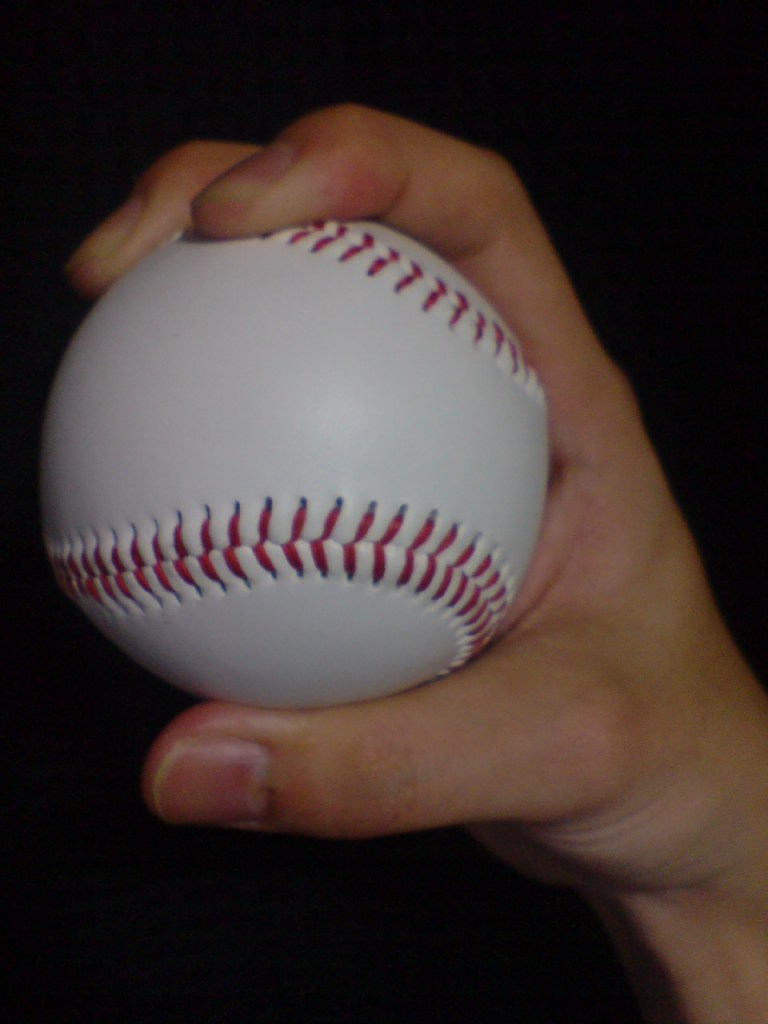
All players that are throwing a ball, no matter where they are at on the field, use the universal four-seam fastball grip. As we discussed in the pitch type blog, the four-seam grip causes the ball to have little movement, which is what you want when throwing at a target. Sometimes it can be hard to instantly grip the ball this way when you are in a rush to throw, so that is why it is important to practice picking up a ball in that grip. 

Conclusion

Making accurate throws as well as getting rid of the ball quickly is crucial to the success of a baseball team. The form and way in which a player throws the ball could be the difference between a runner being out or safe. 

The Wide Variety of Pitches

Pitchers are made unique by the number of different pitches they throw and how well they throw them. Some pitchers are notorious for throwing the knuckleball, and some are famous for their 12-6 curve ball. Pitchers must mix up the kind of pitches they throw so that it keeps the hitter off balance. Here we will discuss how to throw several pitches and the grips for them. There will be pictures to help demonstrate how to throw the pitches.

The infamous four-seam fastball

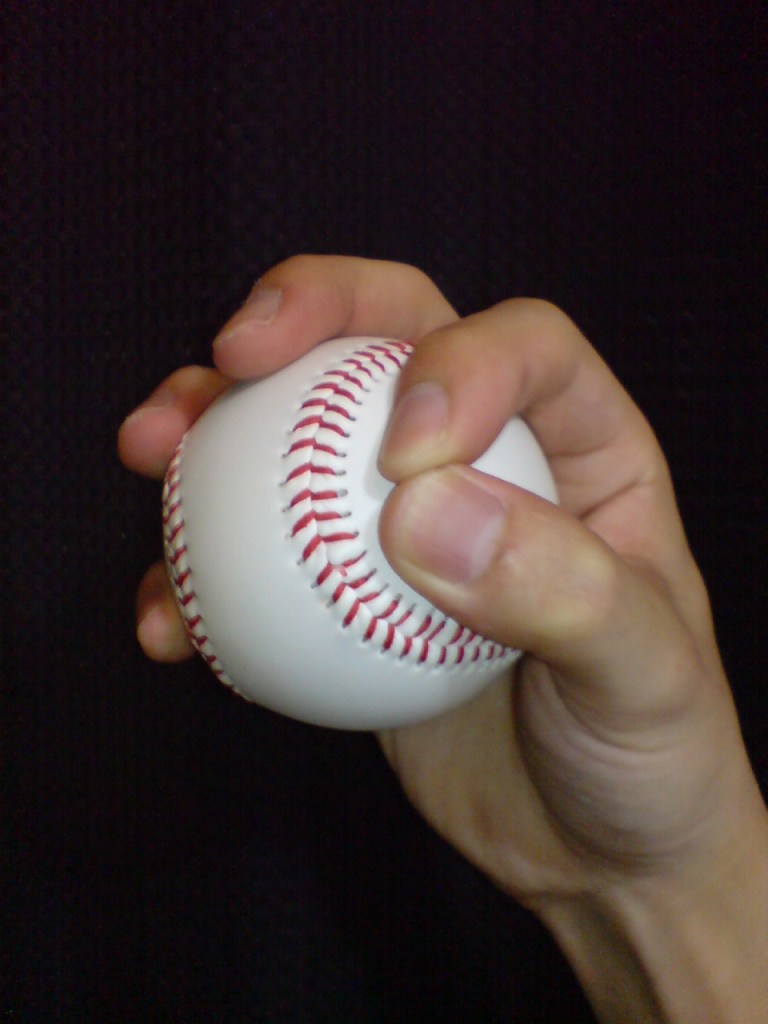
The four-seam fastball is the most common pitch to be thrown in all of baseball. This pitch is a straight-forward pitch that typically does not have a lot of movement. This is also normally the fastest pitch in baseball. The way your fingers grip the seams cause the rotation of ball and fast movement towards the catcher’s mitt. The grip for this pitch is to use three fingers with your index and middle finger stretching across two of the red seams. It is called the four-seam fastball because your two fingers on top are touching the seams of the baseball in four different spots. This is also the grip that most all fielders use when they throw the ball anywhere on the field.


The two-seam fastball

The two-seam fastball is similar in speed to the four-seam fastball, and some pitchers use it as an alternative. The two-seam fastball is known to have a little bit of sideways movement when it is thrown. Similarly the the four-seam, your fingers only touch two seams when throwing this pitch. The four-seam and two-seam fastball are the two easiest pitches to teach a pitcher because a normal throwing motion is involved.

The changeup

The changeup can be thrown in a number of different ways. The two most common are the circle changeup and the five-finger changeup. All changeups are intended to slow down the speed on the ball, but give an illusion that it is a fastball. The arm motion is the exact same, but the grip on the ball causes the ball to be thrown at a slower speed. The circle change up is gripped by making a circle shape with your thumb and index finger and placing the rest of your fingers anywhere on the ball. When you throw this pitch, the ball will naturally slow down from rolling off the three loose fingers. The five-finger change up is gripped by evenly spreading your fingers out over the entire ball. When you throw this pitch, the more thumb pressure that is applied, the more the ball will slow down.

The curve ball

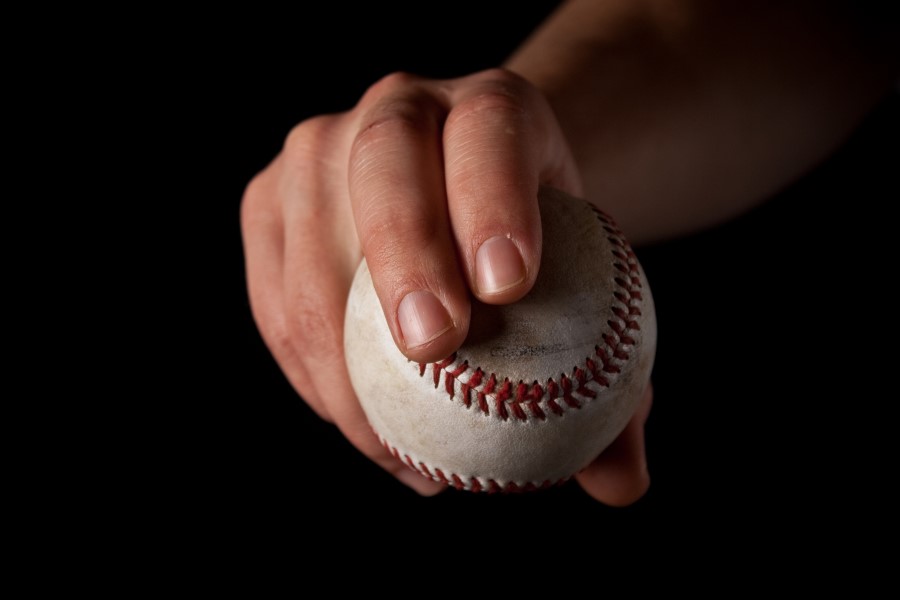
Here is where we begin to get tricky. The grip of pitches like this is not necessarily the hard part, but the throwing motion in which you throw them can become difficult. These types of pitches can also put a lot of stress on your arm. The curve ball and other specialty pitches are not normally taught or thrown until a player reaches at least age 12. The curve ball is thrown by placing your index and middle finger together parallel to one of the long red seams. When you throw this pitch, you wanna to throw it so that your fingers rotate over the top of the ball. This will allow the ball to curve downward as the pitch is approaching the plate. This pitch has the same ball rotation as a four-seam fastball, so it can be deceiving. The curve ball is typically thrown to either strike someone out or to keep from allowing them to hit it hard into a gap in the field.

Conclusion

With these four pitches, you will be able to be an effective pitcher. Most pitchers at the highest levels in the game only have these four pitches to throw. They cover all levels of difficulty and effectiveness. If a pitcher can perfect these pitches, they are hard to hit off of. Many other pitches such as a knuckle ball and a screw ball have entered the game over the years making it interesting, but the basics encapsulate the majority of major league pitchers.

Coming Off The Mound

Pitching a ball at a speed over 90 miles per hour within a two foot by one foot strike zone can be seen as one of the biggest delicacies in all of baseball. It is a craft that takes an extreme amount of practice, and you also must care for your health at the same time. By throwing as hard as you can off of the pitcher’s mound constantly, a pitcher can face severe fatigue in all joints of their arm. In baseball, pitchers typically don’t throw in a game situation for consecutive days. Aside from maintaining a healthy arm, pitching is an art that few players have. If you throw the wrong pitch or the ball in the wrong location, it can make or break the entire game. The pitcher is arguably the most important player in the field. Here, we will discuss the fundamental basics of pitching and what an average player must do to increase their pitching capabilities. 

From The Windup

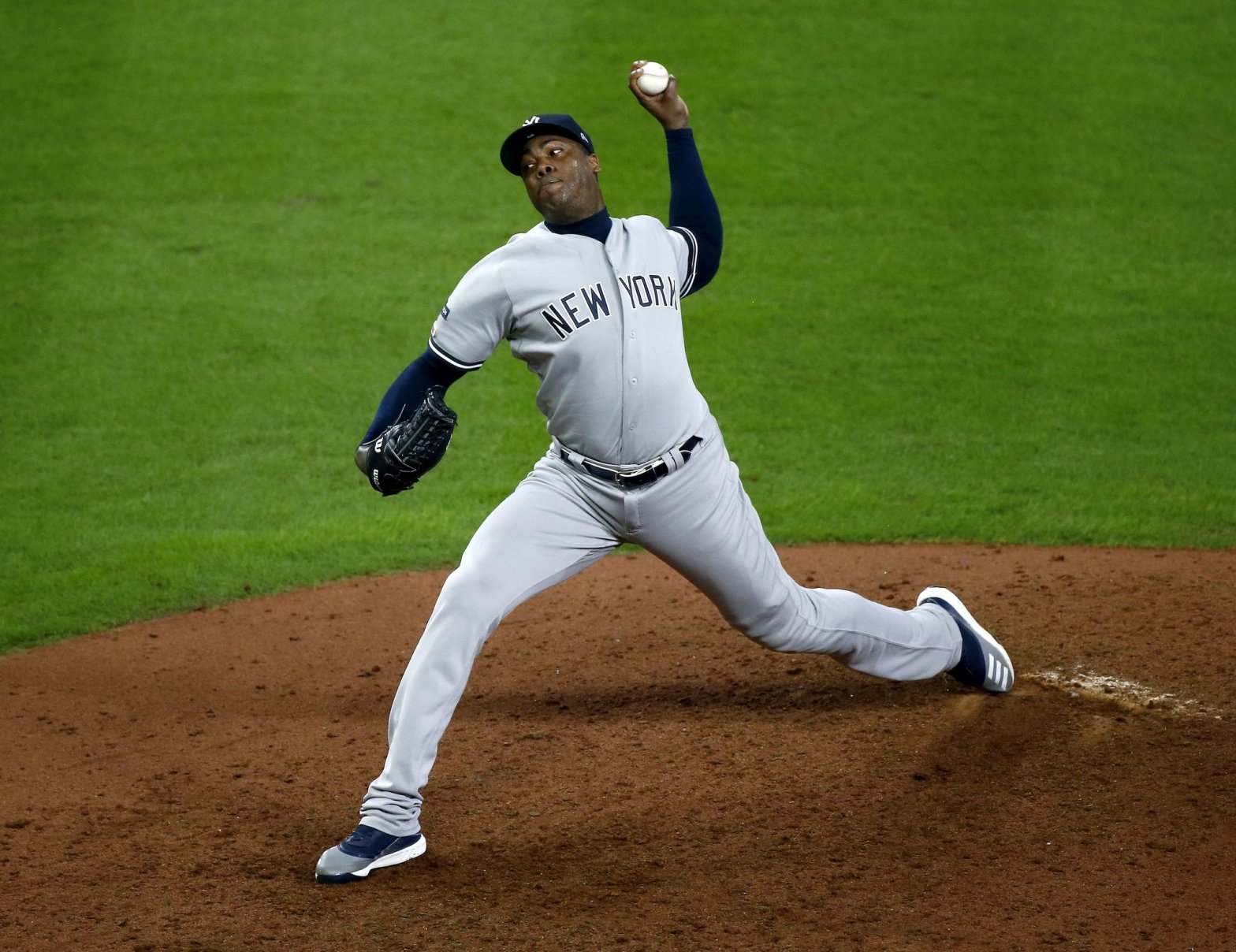
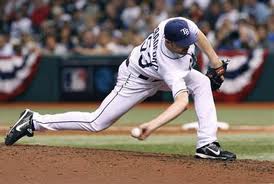
The windup is considered the most commonly used pitching motion when there is no one on base. It is begun by approaching the mound and placing both heels on the pitching rubber. The pitcher’s first task is to pick up the sign that the catcher is showing to him, so that he knows what pitch he is supposed to throw. The catchers sign will also give the pitcher a location for the throw. Once the pitcher has picked up the sign and is ready to throw, they start the motion of the windup. The windup is begun by stepping to the side with your glove side foot and turning your throwing side foot so that it is parallel with the pitching rubber. Then comes the leg kick. The leg kick is primarily where most pitchers gain all of their momentum. The pitcher should bring their leg up towards their chest and turn their hips to the inside. From this position, the pitcher is now ready to drop their back leg and drive off of the pitching rubber with a long stride. The longer the stride of a pitcher, the faster the velocity on the ball will be. One of the pitchers currently in the major leagues that is known for his long stride is Aroldis Chapman. Evidently, Chapman has also thrown a baseball at the speed of 106 miles per hour in a live game. That speed is almost unheard of. Nevertheless, after the stride, the pitcher will throw the ball towards the target that the catcher has made for them. As with fielding, the follow through of pitching is just as important. The pitcher will finish with a follow through that places them in a perfect position to then become another fielder. 

The Stretch

This form of pitching called the stretch is typically used when there are runners on base. The basic concepts of physically throwing the ball are the same as the windup, but the beginning stages are a little different. The stretch starts with your throwing side foot already parallel with the pitching rubber and your other foot out in front of you. While in this position, the pitcher is free to move their shoulders and look in whichever direction they please. This is usually when the pitcher will receive the sign from the catcher. Once the sign is received, it is common for the pitcher to look at the runners on base to make sure they are not too far off of the base. Then the pitcher will come set by bringing their hands together as well as their feet closer together. At this point, the pitcher can no longer move their shoulders to glance at the runners. Any movement of the shoulder will be considered a movement of throwing the ball towards home plate. When ready, the pitcher will perform the same throwing motion as the windup and follow through similarly. 

Conclusion

This outlines the two various positions that a pitcher normally throws from. Most pitchers have different mechanics and quirks that they like to apply to their throwing motion, but the basic fundamentals of all pitchers are the same. In future posts, I will outline more in depth the nuts and bolts of pitching, so that one day you might be able to pitch in the major leagues or teach your son how to pitch.

Catcher’s Eye View

One of the most critical positions in the game of baseball is the man that sits behind the plate. The catcher and the pitcher in tandem are in complete control of the game. The speed of the game, the energy of the game, and the play calls normally all flow from the catcher. Here in this post we will discuss all of the different roles and responsibilities of a catcher, and why they are one of the most valued positions on the field.

The Mindset

First off, many people are thinking there is no way that they would have the guts to get behind the plate and catch a ball that is going that fast along with a swinging bat coming right through the zone where you need to catch it. This is very valid and that is why it takes a strong minded player to take on this position. The man who plays this position at a competitive level is usually a leader on and off the field, and does not fear getting hit with the ball. They must be not only skilled to catch the ball but also willing to take the hit of possibly blocking a 80 mile per hour curve ball in the dirt.

Form

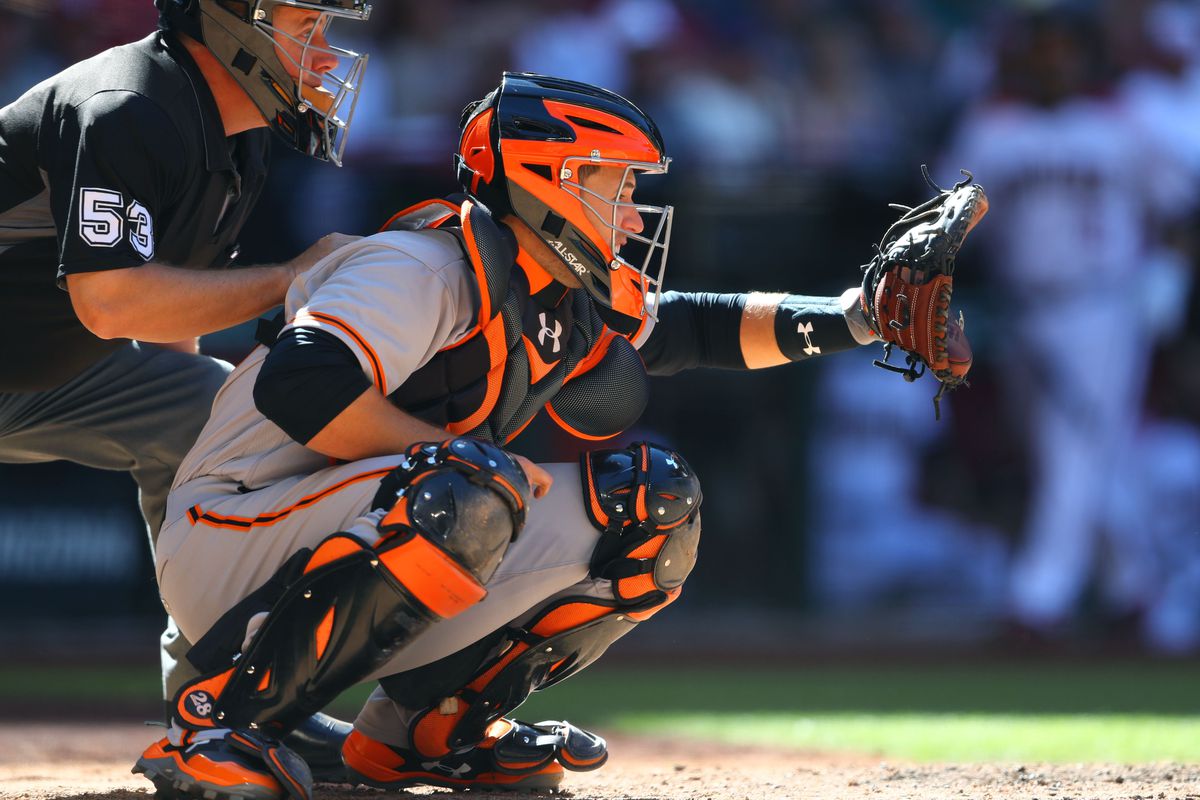
Catchers normally take on several different squatting positions while they are playing. Typically if there is no one on base, the catcher can be more relaxed and also create a lower target for the pitcher. That is one of the main goals of a catcher is to create a target for where the pitcher is supposed to throw the ball. The catcher will normally set up lining up with where they intend the pitch to be thrown. If there are runners on base, the catcher must be more aware of the runners potential to steal. In this scenario, the catcher will most likely keep their glove lower but stay out on the balls of their feet. If a runner steals, the catcher must be in a position to make an accurate throw quickly to get the runner out.

Framing

This is probably the most important aspect of a catchers success in regards to the pitcher. The catcher needs to properly frame the ball so that the umpire will call as many strikes as possible. Framing is a technique that catchers and other players on the field use to display the ball in a way that assures that the ball was in the strike zone. This means that a catcher must have a firm hold on the ball once it hits their glove. Ultimately, framing the ball helps the umpire to see strikes and balls more clearly. If close strikes are not being called, often times catchers can improve some of those calls with the skill of framing.

Pitch Calling

Another important part of catching is pitch calling. You are usually responsible for relaying the type of pitch you want the pitcher to throw. Different scenarios change which pitch is ideal to throw. The catcher relays these signs usually by using hand motions, showing various numbers on their throwing hand. This will indicate to the pitcher what pitch to throw and where to locate it. If there is a lack of communication on this step, it can make for big mistakes in the flow of the game.

Conclusion

Catching is a super vital position to the game of baseball. Catchers are leaders on the field by controlling and dominating the flow of the game. Each team typically only has one or two catchers, so this position is highly valued. While this only scratches the surface of the duties of a catcher, they are very valuable assets.

Lefty Batter vs. Righty Batter

What are the benefits of batting from the left or right side? Why do coaches pinch hit? Is there a better side to be able to hit from? Here we will discuss the common misconceptions of a lefty vs. a righty batter. We will weigh the benefits and analyze the specifics of batting from both sides of the plate.

Left-Handed Hitters

There are certain privileges that left-handed batters have in regards to hitting that right handed hitters don’t have the luxury of. When a left-handed hitter swings, all of their body momentum is directed towards their running target: first base. This gives them the benefit of getting a head start on their way to first. A common misconception in baseball is that all left-handed players are faster than right-handed players. We know that this is not true, but there are certain liberties the left-handed hitters have. They also have the luxury of drag bunting. Drag bunting is a technique that is used by hitters to try and scratch out an easy hit. It is begun by showing the bat very late and starting to run towards first base as the hitter makes contact with the ball. Right handed hitters would not be able to accomplish this to the same effectiveness because they would be moving across the plate, which is where the ball is being thrown. Another benefit of being a left-handed hitter is that on a lot of fields, the right field fence is the most shallow. Left-handed hitters who pull the ball to right field can have better opportunity to hit a home run, whereas right-handed hitters have to hit it further if they pull the ball.

Right-Handed Hitters

Contrary to left-handed hitters, right-handed hitters have their momentum moving towards third base instead or first when they are hitting. Right-handed hitters hit more frequently to the left side of the field, so that is their benefit. The time they have to run to first base is longer than a typical left-handed hitter. Also, right-handed hitters are also typically right-handed fielders. It is more ideal for a team to have right-handed people in the field than left-handers. There are very few positions that a left-handed person can play. A right-handed player can play any position on the field effectively.

Switch Hitters

What exactly is a switch hitter? How can a player become a switch hitter? How do they choose which side to hit from? A switch hitter is a hitter that is proficient at hitting from both sides of the plate. Most switch hitters become proficient as a result of a lot of practice. There are definitely some natural born abilities that are involved, but most hitters have a preferred side that they would like to hit from. Switch hitters choose which side they are gonna hit from based off the pitcher most likely. If there is a right- handed pitcher, most switch hitters will hit from the right side. If there is a left-handed pitcher, most switch hitters will hit from the left side. They hit from those side of the plate during those situations because they can see the ball a lot quicker. A right-handed hitter facing a left-handed pitcher can be difficult because you have limited visibility until the ball is right on you. When a pitcher is throwing 90 miles per hour or higher this becomes very difficult to pick up the ball.

Conclusion

While there are benefits and negatives to hitting from both sides of the plate, the one thing that is always consistent is the mechanics. Swing mechanics for a swing never change whether you are hitting from the right or left side.

Running with a Purpose

Stretching a double into a triple or a single into a double can be the difference in one or two steps. Fundamental running is so crucial to the game of baseball and can be seen as a highly underrated aspect of the game of baseball. Effective running has won many games over the course of baseball history. The term “tie goes to the runner” is a rule that has saved base hits for many players. In this post we will describe the most effective way to run the bases and how to stretch hits into one base further. 

Form

Using proper form to run the bases is a key aspect to effectively run the bases. Most base hits are the time difference of less than one second. The proper form should be to keep a steady head. A moving head strains your body and ultimately will slow your running time. Your body will only move as fast as your arms move. The quicker you move your arms, the faster your feet will follow. This is typically a common routine for runners to practice running faster. I use to practice by sitting on the ground with my legs out in front of me by pumping my arms as fast as I can for certain time intervals. Sometimes I would also use dumbbell weights to amplify the amount of strength I was gaining during running.

What are other helpful alternatives?

One of the most helpful tools that is used to increase speed is by using a parachute. A parachute will increase the resistance that you are running against. This way will show results a lot faster in comparison to other methods. Typically some people wear ankle weights to increase speed. Ankle weights definitely help, but the issue with ankle weights is that a lot of your speed comes from your arms. Running with dumbbell weights would be a much  more beneficial alternative. Ankle weights also strain the knees of the runner.

Running the bases 

The first thing to determine when you are running to first base is where you hit the ball. If you hit it on the ground in the infield, you know that you want to run as fast as you can in a straight line for first base. As you are approaching first base in that scenario, it is crucial that your foot hits the front part of the bag. This can save you a large amount of time even with such a minor detail. The foot that hits the bag should be whichever foot is next in stride. You should avoid lunging out for the bag. This could cause many number of ankle or knee injuries. Also, it is proven that maintaining the same stride will take less time than striding out at the last second. After the runner hits the bag they should break down immediately and look to their right to see if there was a bad throw made. You should also turn the right side when returning to the base. 

If you have hit the ball to the outfield, it is more beneficial to take what most coaches call the “banana route.” About one-fourth of the way to first base, the runner should start to make a gradual loop in order to be able to angle their body towards second base. The first base coach should be telling you what to do, but this route also helps you to see about where the ball was hit. Your foot should hit first base on the inside corner and propel you towards the next base. 

Conclusion

As you can see, these are just the basics of running primarily through first base, but running is important to the entire game of baseball. A route a fielder takes when running for a fly ball may determine whether or not they catch it. Proper running mechanics and practice are essential for an effective baseball player. 

The Fundamentals of Outfield

In our previous writing, we discussed the purpose and fundamentals of being an infielder in the game of baseball. We talked about the “Five F’s of Fielding.” While those five F’s look a little different when we translate them to the outfield, they all still apply. An outfielder will still need footwork, to field the ball, funnel the ball, fire, and follow through. As an outfielder, your throws can become a lot longer than an infielder, so proper mechanics is necessary when you are fielding as an outfielder.

The Footwork:

Infielders start there whole process of fielding with a relatively wide base. Most of their movement is laterally within a range of around 50 feet. However, an outfielder must cover a lot of ground in a small amount of time to catch a fly ball or throw a ball in to keep a runner from advancing. Typically, an outfielder stands with feet almost shoulder width apart, but they normally stagger their feet. They don’t set up square to the batter because their first step should always be back. This brings me to a good point. The first step of an outfielder on any ball hit in their direction should ALWAYS be back. Why? Simple. Because it’s a lot easier to go forward than it is to go backwards! If all of your momentum is moving forward and the ball is going to be hit over your head, it will be a lot harder to make the correction before the ball hits the ground. If your first step is back, it also gives you time to evaluate how deep the ball is going to be hit and where your next move should be.

Outfielders also approach ground balls differently than infielders depending on the situation. If they need to get rid of the ball quick and make a long throw, it is not necessary or correct to completely break down to field the ball as an infielder does. Outfielders typically run through the ball with their glove low enough to receive the ball into their glove. When catching a fly ball, an outfielder should catch the ball as they are moving towards their next intended throwing target. You must keep your feet moving while catching a fly ball so that you can adjust your body as needed. It is very easy to misjudge a ball that is hit when the wind is pumping 15 mph and the fans in the stands are yelling at the top of their lungs. Remember, we first stated that baseball is a very mental game.

Fire and Follow Through:

The fire a follow through is similar to an infielder except the majority of your throws are much longer. As an outfielder, after you field the ball, you want to crop hop into your throw to gain momentum. Infielders shuffle sideways before throwing it to get their momentum towards their target, but you need everything in your body to make an effective throw as an outfielder. The follow through should be finishing the throw moving towards your target. Your arm should finish by crossing over your glove side knee. A proper follow through will lead to a more effective throw.

Conclusion:

There can be many comparison drawn between infielders and outfields, but they are definitely very distinct positions. Outfielders are typically very fast with very strong arms. Their footwork is one of the big differences that distinguishes them between infielders. If one can master fielding as both an infielder and an outfielder, it opens the door for so many options for that player. They will then be seen as what is called a utility player.

The Five F’s of Fielding

In most sports, competitors will often state that “offense wins games, but defense wins championships.” Most of the time this is correct. Games can be won off of producing an extreme amount of hits, but are often lost by one or two crucial errors. When a game comes down to the wire it is often contingent and won off of one big hit or one timely error. That is what makes defense so vitally important to the game of baseball. When it comes to defense, the infield will often receive the majority of the balls hit and need to be equipped with fundamentals to quickly release the ball to get an out. Here we will break down the five F’s of fielding of a fundamentally sound infielder.

Feet

In order to do anything effective in the realm of a sport you must have efficient footwork. For baseball and fielding, this looks like beginning with what most coaches call the “prep step.” Prior to the pitcher throwing the ball, each infielder should approach the batter taking about 2-3 steps to get your feet moving. The fielder should land on the balls of your feet spread about shoulder width apart. The middle infielders (shortstop and second baseman) should finish with a narrower stance than the corner infielders (first and third baseman). Once the ball is hit to any of the fielders, that fielder should shuffle their feet so that they can field the ball on their glove side. This certainly doesn’t complete the work of the feet, but it establishes the prep step up until the infielder fields the ball.

Field

Fielding the ball is obviously the most crucial part of this process. Most mistakes in the process of fielding are made when an infielder is fielding the ball. In the event of a ball hit to the forehand of a player, that player should position their body so that the ball will be fielded on their glove side. Charging the ball is critical to increase the amount of time you have to throw the ball before the runner is safe. Practically this looks like moving your body towards the ball and breaking down so that you can field it on your glove side. Your glove should begin touching the ground with knees bent, back straight, and head up. This position will create a wall so that if the ball takes a bad bounce, your body will knock it down. Your arms should both be straight and have loose wrists. Loose wrists are key to receiving the ball in. You should field a ball from the ground up.

Funnel

Once the ball is fielded with two hands the next step is the funnel or receive the ball into your body. This is intended to help secure the ball and to get ready for the throw. The non-glove hand should cover the ball on top of the glove while the glove is moving closer to the fielders body.

Fire

The fire is another term for throwing the ball. After funneling the ball closer to your body, the fielder should shuffle at least once to get your body moving towards your target, and then throw the ball. You should typically have a shorter arm release to decrease the amount of time you are holding the ball. The more time you have to throw the ball, the more you can shuffle towards your target to ensure an accurate throw.

Follow-through

The final step of fielding is the follow-through. This step is super important and without it, your throw could end up in one of those crucial errors that cost your team the game. After the throw, your body should continue to move towards your target while your arm is moving across your body.

With these five F’s of fielder, you will be guaranteed a more successful defense experience and be more of an attribute to your team. While this only scratches the surface of fielding a baseball, there is a lot more nitty gritty that we could get into. However, for the beginners, this will put you on the right track to becoming a better player.

Scouting for Hitters

The Major League of Baseball produces thousands of incredible baseball players, some of which make it to the Hall of Fame, some that make it to a State Farm All-Star Game, and some that make it and just never continue to develop. Among these thousands of players are some that are tremendous hitters, breaking records set by previous effective players. It must make us wonder: how do these players “make it”? Are they followed from a young age in high school? What do professional scouts look for when looking at a player? How do you know that they can compete at a high level of play? Here we will look at what a major league scout looks for in a hitter and how to ensure their level of endurance in the MLB.

The Criteria

Bat Speed

One of the biggest things that a major league scout looks for in a hitter is bat speed. College hitters swing aluminum, and major league players swing wood. However, there is no distinction between these two when it comes down to bat speed. Can the player swing it or not? Eric Hosmer of the Kansas City Royals currently has one of the fastest bat speed in the major league. His average bat speed is 106mph. As a result, his swing produces many home runs and balls hit extremely well.

Stance and Approach

How a hitter stands can determine a lot. His confidence level can usually be shown in his stance. Do he look like he wants to be up there? Most exceptional hitters walk up to the plate and take on the pitch with extreme confidence. They wanna hit the ball. They have a good knowledge of where the strike zone is. There is a look. While inside the game of baseball, most knowledgeable scouts can determine a baseball player just by looking at them. A good player holds themselves differently, approaches life differently, and even looks at others differently. A good hitter has a look that can only be mirrored by other good hitters. One scout stated “A lot of what I’m looking for goes beyond what they’re doing at the plate… It’s nice when a guy passes the eye test right when he walks off the bus… At the plate, generally I’m looking at the mechanics of their swing and the bat speed that they have.”

Hands

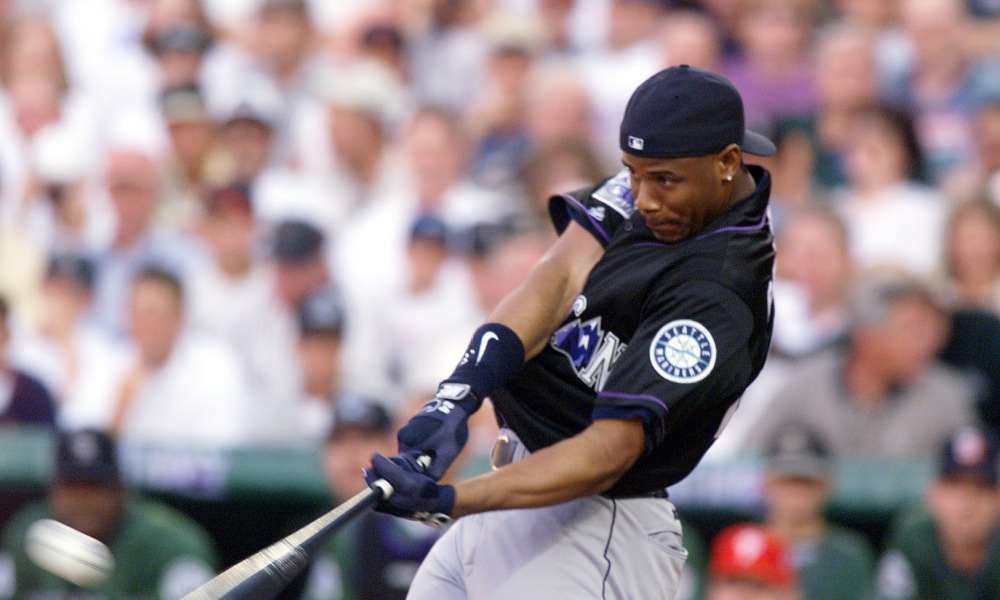
Another major mark that a scout looks for in a great hitter is their hands. How do they grip the bat? Is it a loose grip? Loose hands on the bat allow for greater whip. The top hand on the bat should be doing a lot of the work to produce a quick swing. The scouts are looking at how quick that top hand makes it through the zone. Big-time major league hitters get their top hands through the baseball. Quick. That is why they make it to the major leagues! Their ability to produce such a quick swing gives them the access to more time to see the ball in order to hit it squarely. Arguably one of the best hitters in the major league to do perform an extremely quick swing was Ken Griffey Jr. Ken was extremely successful in the major league and was seen as an extremely good power hitter. He hit 630 home runs over his 22 seasons in the major leagues. I believe the contact that he makes with the baseball can be attributed to his bat speed due to his hands. He has a longer time to sit and wait on the ball to get into the strike zone.

Batting Practice

Another key thing for scouts to look for is how they carry out the actions previously described in batting practice. Batting practice gives scouts a first impression of the abilities of a hitter. What does their bat path look like? Do they have a good approach and stance? Can they effectively move their hands through the zone. All of these fundamentals can be seen in batting practice. While batting practice isn’t an overall indicator, it can help to influence a decision.

Conclusion

While there are many other things a scout looks for in evaluating a player’s potential in the major league, these are some of the key aspects of a scout’s agenda. This agenda and criteria may differ based on the position that a hitter plays. Scouts typically look for power out of the corner positions and for speed and quick hands out of an outfielder or middle infielders. These things can be considered after the fundamentals are established. If a guy can’t get his hands through the baseball and doesn’t have a great deal of confidence, his success in the major league will be a failure.

DATE TAKEN: 7/6/98—Seattle’s Ken Griffey Jr hits the second of his eight homeruns in the first round of the homerun hitting contest Monday evening. ORG XMIT: RH4452
Design a site like this with WordPress.com
Get started